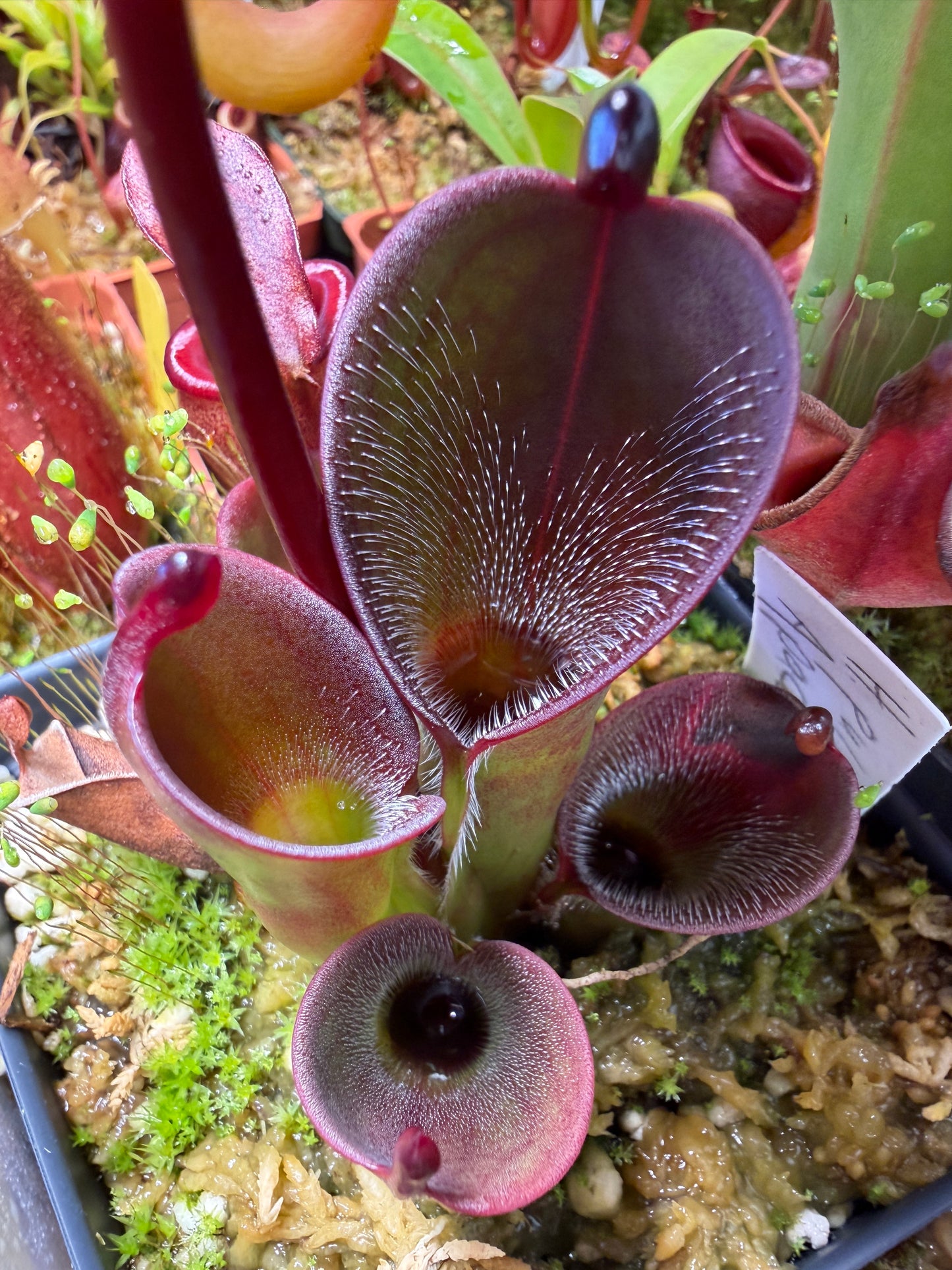
Heliamphora pulchella Apacapa
Heliamphora pulchella Apacapa
Couldn't load pickup availability
Heliamphora pulchella from the remote Apacapa Tepui in Venezuela’s Chimanta Massif. Known as the “Beautiful Heliamphora” (from the Latin pulcher meaning pretty), this compact species lives up to its name with its ornamental foliage and delicate, trumpet-shaped pitchers that glow in shades of emerald green, accented by subtle red veins under optimal light. Endemic to the misty highlands of South America’s tepuis, this petite pitcher plant forms tidy clumps, making it an ideal choice for smaller terrariums or shelves without sacrificing stunning visual appeal.
As a true sun pitcher, H. pulchella Apacapa is one of the most adaptable and variable forms in the genus, thriving in cooler, high-humidity environments while capturing insects with its nectar-filled traps. Whether you’re a seasoned collector or dipping your toes into highland carnivores, this slow-growing gem offers years of fascination as it offsets into a lush rosette. Each plant is nursery-grown from tissue culture for healthy, vigorous clones—perfect for enthusiasts seeking that authentic tepui allure.
Plant Size: Mature pitchering division clumping specimen (3-5 adult pitchers.
Pot Size: have a 4-inch nursery pot ready on arrival.
Key Features
• Carnivorous Traps: Elegant, upright pitchers (up to 4 inches tall) with hooded nectar spoons that lure and drown prey—nature’s own elegant insect hotel.
• Compact Growth: Forms dense, low-growing clumps; ideal for tabletops or vivariums (rarely exceeds 6 inches in height).
• Coloration: Vibrant green pitchers with potential red flushing in bright light; foliage emerges with a soft, almost velvety texture.
• Flowering: Produces charming white to pinkish blooms on tall scapes in spring/summer, adding an extra layer of beauty.
• Rarity: A sought-after locality form from one of Venezuela’s most biodiverse tepuis—fewer than 100 plants available this season.
Care Instructions
Heliamphora pulchella Apacapa is moderately easy for experienced growers but rewards attentive care mimicking its highland habitat. It’s more forgiving than many highland species but prefers consistent moisture and cooler temps.
• Light: Bright, indirect light (1,500-2,500 foot-candles) or 40-50% full sun. Lower light yields greener foliage; supplement with grow lights in winter. Avoid direct midday sun to prevent scorching.
• Water: Top-water daily in warm weather (summer highs up to 80°F) to keep pitchers full and soil moist—never let it dry out. Use reverse osmosis, distilled, or rainwater only (TDS <50 ppm). No saucers; allow slight drainage to prevent stagnation. Reduce to every 2-3 days in cooler months.
• Temperature/Humidity: Day: 65-80°F; Night: 50-65°F (cooler nights encourage pitcher formation). High humidity (70-90%) is essential—grow in a terrarium, humidicrib, or under a humidity dome.
• Soil: Pure long-fiber sphagnum moss or a 50/50 mix of sphagnum/perlite. Repot annually in spring.
• Feeding/Fertilizer: Carnivorous—feed pitcher with small insects (flies, ants) monthly. Dilute orchid fertilizer (1/4 strength) every 4-6 weeks during growth; avoid over-fertilizing to prevent root burn.
• Dormancy: Minimal—provide brighter light and drier conditions in winter, but no true dormancy needed.
• Pests/Diseases: Watch for fungus gnats; treat with diluted hydrogen peroxide. Good airflow prevents mold.
Pro Tip: For best color, pair with a small fan for gentle air circulation, simulating tepui winds. This clone is known for its resilience but grows slowly—patience yields rewarding clumps!
Why Buy from Us?
• Ethically Sourced: Propagated in-house from premium division; no wild collection.
• Expert Support: Free care guides and community access with every purchase.
Add to Cart Now and bring a slice of Venezuelan tepui magic to your home. Questions? Message us—we’re carnivore fanatics too!